Alumni Stories
Jesse Nieman ‘25 knew in coming into Westmont that he wanted to study abroad and the nature of the Westmont in Mexico quickly showed itself to be the most attractive option. Dr. Docter was very helpful in illustrating the ease and benefit of adding a Spanish major, and convinced him to do so. Jesse says, “My semester in Mexico was undoubtedly the most influential of all my semesters at Westmont. I was able to live with a family, attend the local university, and develop relationships over the semester. I danced with friends in the plazas, performed with local musicians, and danced in a few quinceañeras. These relationships expanded my understanding of time, of hospitality, and of community.” Since graduating, Jesse continues to use Spanish daily as a medical assistant at the Santa Barbara Neighborhood Clinics. He asserts that the ability to converse with patients in their native tongue is an invaluable skill and one he will continue to use both as he enters medical school and throughout his career as a physician.
Sysum, Steve ‘24 explains that after many years of not deciding which direction to take, he found his way to Westmont’s Modern Languages department to complete a degree in Spanish Literature. “Everyone in the department went to great lengths to get me across the finish line and toward a purposeful life after graduating.” The journey included a transformative semester studying in Mexico which solidified his identity as “a true bilingual,” a supportive final two years accommodating distance learning, and a comprehensive exposure to the great Spanish literature from across the world and history. Steve says, “Dr. Docter and Dr. Cardoso deserve the highest praise for acutely understanding my particular pedagogic needs and challenging me where I needed it. Their hearts are passionate for passing on a love for the language and aptitude to use it well, in addition to becoming a world citizen. With my degree I have a strong wind in my sails to become a certified Court Interpreter for Spanish and thereby extend the transformation I experienced while completing my degree. The program made me a well-rounded bilingual student, human, and professional. I'll never have to worry about finding a great career and life purpose!”
Mercy Milliken ’23, “Being a Spanish major was the great unexpected gift of my Westmont experience. Initially aiming to fulfill a language requirement, the department quickly became a home, as I was enveloped in grace and the rich knowledge of the Spanish professors who invest in students in deep, dignifying ways. Amidst pre-medicine and kinesiology classes, my small Spanish courses were a breath of fresh air, where I learned how to discover humanity, my own and others’, with honesty and curiosity. I’ve learned to trace the histories of Spain and Mexico, discuss complicated social topics, read and write poetry and literature, and gained confidence, particularly while participating in Westmont in Mexico, where my growth was catalyzed by a loving host-family, local professors, internship opportunities, and a freedom to explore. This learning has come to life in Santa Barbara, where I’ve found it easy and fulfilling to use my Spanish every day. Surrounded by some of the most talented and dedicated students and learning from professors so knowledgeable and kind, I have never questioned the value of pursuing Spanish at Westmont. I have no doubt I am a better person and learner, more marketable employee, and more faithful follower of Christ because of this program.”
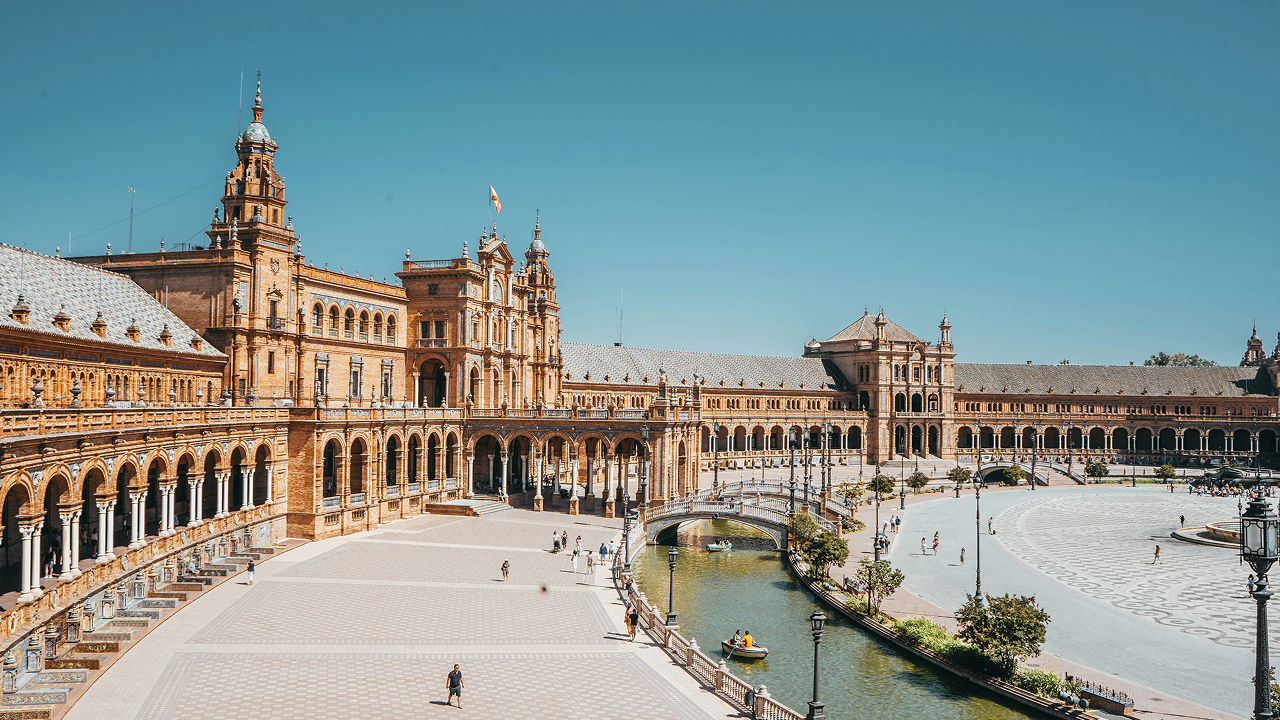
Global Studies
- Westmont in Mexico
- Summer in Seville
- Summer in Quito, Ecuador
Internship opportunities in schools, social service agencies, hospitals, and more
Westmont in Mexico
Hannah Van Essen '25
Isabelle Esber '20
Lucca Rodriguez '26
Career Paths
International Business Education Social Services and NGOs Law Foreign Missions | Speech and Language Pathology Government Services Health and Medicine Peace Corporations |
See Career Paths for Graduates Who Studied Spanish at Westmont
Academic Flexibility
Spanish is an excellent double major, easily accomplished among most Westmont majors and provides great opportunities for any professional endeavors.
Faculty and Staff
Sample Schedule
Majors are required to take 40 upper-division units in Spanish, including one semester of 14-16 units at an approved university in Spain or Latin America. The department recommends that the semester abroad be taken in the junior year; in any case, the student must first have completed four semesters of college-level Spanish (or the equivalent) and four units of upper-division work.
Fall
- SP 001
- SP 002
- SP 003 or SP 100 (depending on language proficiency)
Spring
- SP 002 or SP 003
- SP 106 (Fluency and Communication or SP 125 (Intro to literature)
Fall
- SP 003 or SP 100
- Spanish Literature course (SP 172-195)
Spring
- SP 150 Cross Cultural Studies
- IS 192 Introduction to Westmont in Mexico
- Spanish Literature course (SP 172-195) or an Approved elective
Fall
- Westmont in Mexico or Semester in Sevilla (SIS)
Spring
- SP 197 Reentry
- Upper Spanish Literature
Fall
- SP 196 Capstone
- Upper Spanish Literature course (SP 172-195) or an Approved elective
Spring
- Spanish Literature course (SP 172-195) or an Approved elective
Majors are required to take 44 upper-division units, including 16 units of upper-division Spanish courses taken at Westmont. Students will work closely with their major advisor, choosing a geographical area of specialization (Spain or Latin America) and related courses outside the Modern Languages Department. Students will complete one semester (14-16 units) abroad in a Westmont-approved program.
Fall
- SP 3 (4)
- RS 10 or 20 (4)
- Distribution/Elective (4)
- PEA 32 (1)
Spring
- SP 4 (4)
- RS 10 or 20 (4)
- Distribution/Elective (8)
- PEA Elective (1)